
Disclosure: this is an independent guide, not the manufacturer’s website. Some links here are affiliate links and we may earn a commission at no extra cost to you. † These statements have not been evaluated by the Food and Drug Administration. This product is not intended to diagnose, treat, cure or prevent any disease, and nothing here is medical or dental advice — bleeding gums, persistent pain, a loose tooth or a mouth sore that has not healed in two weeks need a dentist.
| Calcium | The raw mineral your body uses to build and maintain enamel and jawbone — works from the inside. |
| Hydroxyapatite | The finished crystal enamel is made of; in toothpaste it works on the surface. |
| Which is better? | Different jobs, not rivals — a complete routine uses both surface care and enough dietary mineral. |
| Dosing context | Calcium DV is ~1,000–1,300 mg/day, mostly from food; supplements top up the gap. |
Search “how to strengthen enamel” and you will meet two words again and again: calcium and hydroxyapatite. They sound like competitors, and plenty of marketing frames them that way. In truth they are two sides of the same coin — one is the raw material, the other is the finished product. Understanding the calcium vs hydroxyapatite difference is the fastest way to cut through enamel marketing and build a routine that actually covers both bases. This guide explains what each one is, how remineralisation works at the crystal level, how much calcium you really need, and how to read a label so the right word means the right thing.
Calcium is the headline mineral in OxyDental Pro, so we will also show where a modest daily dose fits into a whole-mouth formula. For the bigger picture, see our overview of keeping teeth and gums strong with minerals, and the companion piece on boron for teeth and bones.
Tooth enamel is the hardest substance in the human body, and about 96% of it is mineral. That mineral is a crystal called hydroxyapatite — a specific arrangement of calcium, phosphate and hydroxide (its formula is often written Ca10(PO4)6(OH)2). So when we talk about strong enamel, we are really talking about dense, well-formed hydroxyapatite crystals, and about keeping the calcium and phosphate that make them where they belong.
Every day, enamel goes through a tug-of-war. Acids — from bacteria feeding on sugar, or from acidic foods and drinks — pull calcium and phosphate out of the crystal (demineralisation). Saliva, with its dissolved minerals, puts them back (remineralisation). Healthy enamel is simply the result of remineralisation keeping up with demineralisation over the long run.
Dietary calcium is the supply side of the equation. Your body cannot make calcium; it has to come from food or supplements. That calcium does two jobs relevant to your mouth. First, during development it is built into the enamel and dentin of teeth. Second, and for adults more importantly, it maintains the jawbone that anchors your teeth and provides the mineral pool your saliva draws on.
Here is a crucial point people miss: calcium in the bloodstream is tightly regulated because your heart and nerves depend on it. If your diet runs short, the body will pull calcium out of bone to keep blood levels steady. Over years, that can weaken the bony support around teeth. So adequate calcium intake is less about instantly hardening enamel and more about maintaining the whole mineral foundation your teeth sit in.
Calcium also does not work alone. Vitamin D is needed to absorb it, phosphorus partners with it to form the enamel crystal, and trace minerals such as boron and magnesium help the body manage mineral balance. This is why enamel support is best thought of as a nutrient pattern, not a single supplement.
Hydroxyapatite (HA) is the crystal itself. In recent years, a lab-made version — often nano-hydroxyapatite, milled to particles similar in size to the natural enamel crystal — has become popular in toothpastes and topical products. Applied to the tooth surface, these tiny particles are thought to fill microscopic gaps and adhere to eroded areas, helping smooth and re-mineralise the outer layer directly. In effect, you are giving the enamel surface the exact material it is built from.
Hydroxyapatite was originally studied by NASA-related research decades ago and has a long track record in dental materials. As a topical ingredient it is a surface strategy: it acts where it touches, while you brush, and does not supply minerals to the body as a whole.
The two work at different addresses, and the research reflects that. Enamel repair happens at the tooth surface, out of saliva, using the calcium and phosphate saliva already carries — a chemistry set out in detail in a 2024 review in Dentistry Journal (PMID 39590389). Applied hydroxyapatite works in that same surface layer, which is why it has a growing clinical literature: a 2025 systematic review and meta-analysis in the Journal of Dentistry examined fluoride-free hydroxyapatite toothpastes for preventing and remineralising initial caries lesions (PMID 40107597), and a companion 2025 in-vitro study measured how far nanohydroxyapatite pastes enhance remineralisation of enamel caries lesions (PMID 40744295).
Dietary calcium is doing something different and slower: keeping the body’s calcium economy supplied, which matters for the jawbone that holds teeth and for saliva itself. The NIH Office of Dietary Supplements calcium fact sheet sets the adult reference intake, and a token amount in a multi-ingredient tablet is not a substitute for it. Neither route is a treatment for an existing cavity, which only a dentist can restore.
Now the comparison makes sense, because we are not comparing two versions of the same thing — we are comparing an ingredient you eat with an ingredient you apply.
So the “which is better” question is the wrong one. Asking whether calcium or hydroxyapatite is better for enamel is a bit like asking whether flour or bread is better for a sandwich. A smart routine keeps up your mineral intake and gives the enamel surface good daily care.
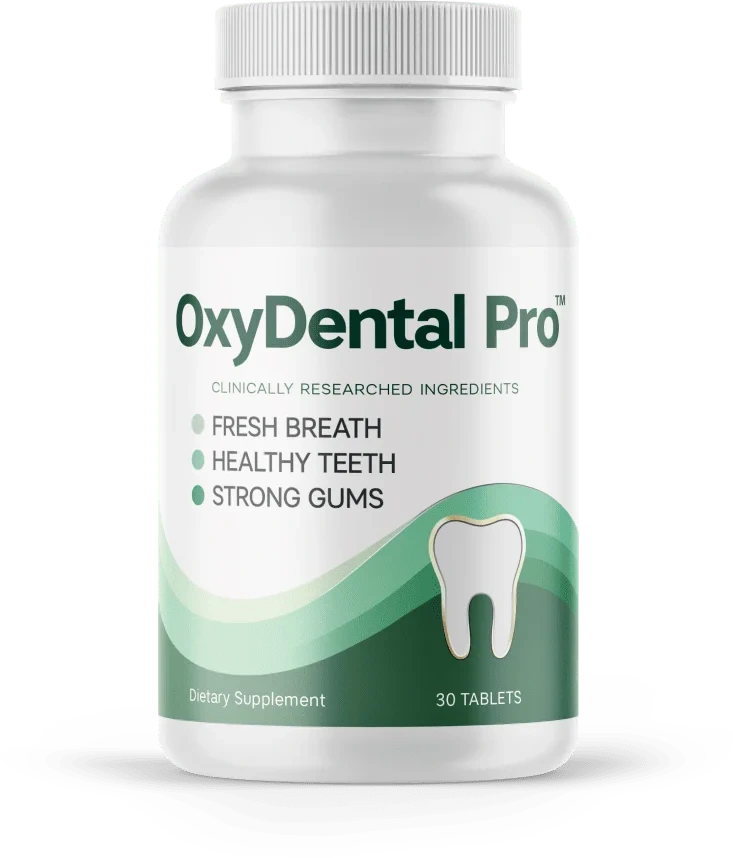
OxyDental Pro sits on the mineral-supply side. Each tablet provides 20 mg of calcium plus iodine, copper chlorophyllin, chromium and a botanical blend — everyday support to complement, not replace, your brushing routine and a calcium-rich diet.
See the Full FormulaCalcium has a clear daily value because it is an essential nutrient:
That is exactly why OxyDental Pro uses a modest 20 mg of calcium per tablet. It is not trying to be your only calcium source; it is part of a five-active daily tablet that also handles breath, sugar-handling and gum support. The heavy lifting for calcium should still come from your plate.
Calcium in the diet is also only as useful as the body’s ability to absorb it, which is a question about vitamin D rather than about calcium — we take it apart in vitamin D and calcium for teeth.
Look for a named calcium form (such as calcium citrate or dicalcium phosphate) with a stated milligram amount and percent daily value, ideally alongside partner nutrients like vitamin D, phosphorus or trace minerals. Avoid vague “bone blends” that hide the amounts.
If you want the surface benefit, look for hydroxyapatite or nano-hydroxyapatite named in the ingredients, or a fluoride paste, which has the longest evidence base for surface protection. Marketing words like “enamel repair” mean little without a named active.
Do not expect a swallowed calcium tablet to polish your enamel surface, and do not expect toothpaste to fix a mineral-poor diet. Pair a good diet and sensible supplement with good surface care, and you have both halves covered. If you want to strengthen the supporting minerals further, our guide to boron for teeth and bones explains a useful partner to calcium.
OxyDental Pro brings calcium together with iodine, copper chlorophyllin, chromium and a botanical blend in one daily tablet. The 6-bottle package is the best value with free U.S. shipping and three bonus guides, backed by a 60-day money-back guarantee.
 See OxyDental Packages
Calcium is the raw mineral your body uses to build and maintain enamel from the inside, supplied through diet and supplements. Hydroxyapatite is the finished crystal that enamel is actually made of, and in toothpaste it works on the surface of the tooth. They support enamel in two different but complementary ways: one systemic, one topical.
Neither is simply better; they do different jobs. Topical hydroxyapatite can help fill and smooth the enamel surface, while dietary calcium provides the mineral your body needs to maintain teeth and the jawbone that holds them. A complete routine uses both surface care and adequate mineral intake.
The daily value for calcium is about 1,000 to 1,300 mg for most adults, mainly from food. Supplements typically top up the gap rather than supply the whole amount. OxyDental Pro provides 20 mg of calcium per tablet alongside other minerals as everyday support, not as a full calcium replacement.
Calcium works best with partner nutrients. Vitamin D helps you absorb it, phosphorus pairs with it to form the enamel crystal, and trace minerals like boron support mineral balance. That is why enamel support is really about a pattern of nutrients, not one mineral in isolation.
For a supplement, look for a named calcium form with a stated milligram amount and supporting nutrients. For toothpaste, look for hydroxyapatite (or nano-hydroxyapatite) listed clearly. Transparency and stated amounts matter more than buzzwords.
Enamel has no living cells, so it cannot regrow like skin. However, its surface can be re-mineralised: minerals from saliva, diet and topical products can be redeposited into softened areas. That is why keeping remineralisation ahead of demineralisation is the whole game.
Sources for the claims above. Every PubMed link was checked against the NCBI record on 3 September 2026, so the title shown here is the title of the paper it opens.
Research into an ingredient is not evidence about any finished product. No clinical trial has been published on the OxyDental Pro formula, and none of the studies above tested it; the doses used in research are frequently different from the amounts on a supplement label.
The OxyDental Research Team is an independent group of writers and reviewers focused on oral-health nutrition and supplement science. We read the ingredient literature, cross-check dosing against public sources such as the NIH Office of Dietary Supplements, and explain the mechanisms in plain language.
Everything here is general educational information about ingredients and their traditional or researched uses. It is not medical advice, and it does not diagnose, treat, cure or prevent any disease. Talk to a dentist or physician about your own situation.
Keep exploring: see how xylitol protects enamel by starving cavity bacteria, why chromium and blood sugar affect your mouth, or return to the OxyDental Pro homepage.
† These statements have not been evaluated by the FDA. This product is not intended to diagnose, treat, cure or prevent any disease. This article is for general information only and is not medical advice.