
Disclosure: this is an independent guide, not the manufacturer’s website. Some links here are affiliate links and we may earn a commission at no extra cost to you. † These statements have not been evaluated by the Food and Drug Administration. This product is not intended to diagnose, treat, cure or prevent any disease, and nothing here is medical or dental advice — bleeding gums, persistent pain, a loose tooth or a mouth sore that has not healed in two weeks need a dentist.
| The idea | Teeth and gums are living, mineral-built tissues — support them with minerals, not just surface cleaning. |
| Key minerals | Calcium plus trace iodine, copper and chromium. |
| Fresh breath | Copper chlorophyllin and peppermint target odour at the source. |
Nutrition supports a healthy mouth. It does not treat a sick one. If your gums bleed when you brush, if a tooth aches or feels loose, if your bite has changed, or if a sore or patch in your mouth has not healed within two weeks, book a dentist — those are signs of conditions that only professional care resolves, and no mineral changes that. Everything below assumes you are already brushing, flossing and getting check-ups.
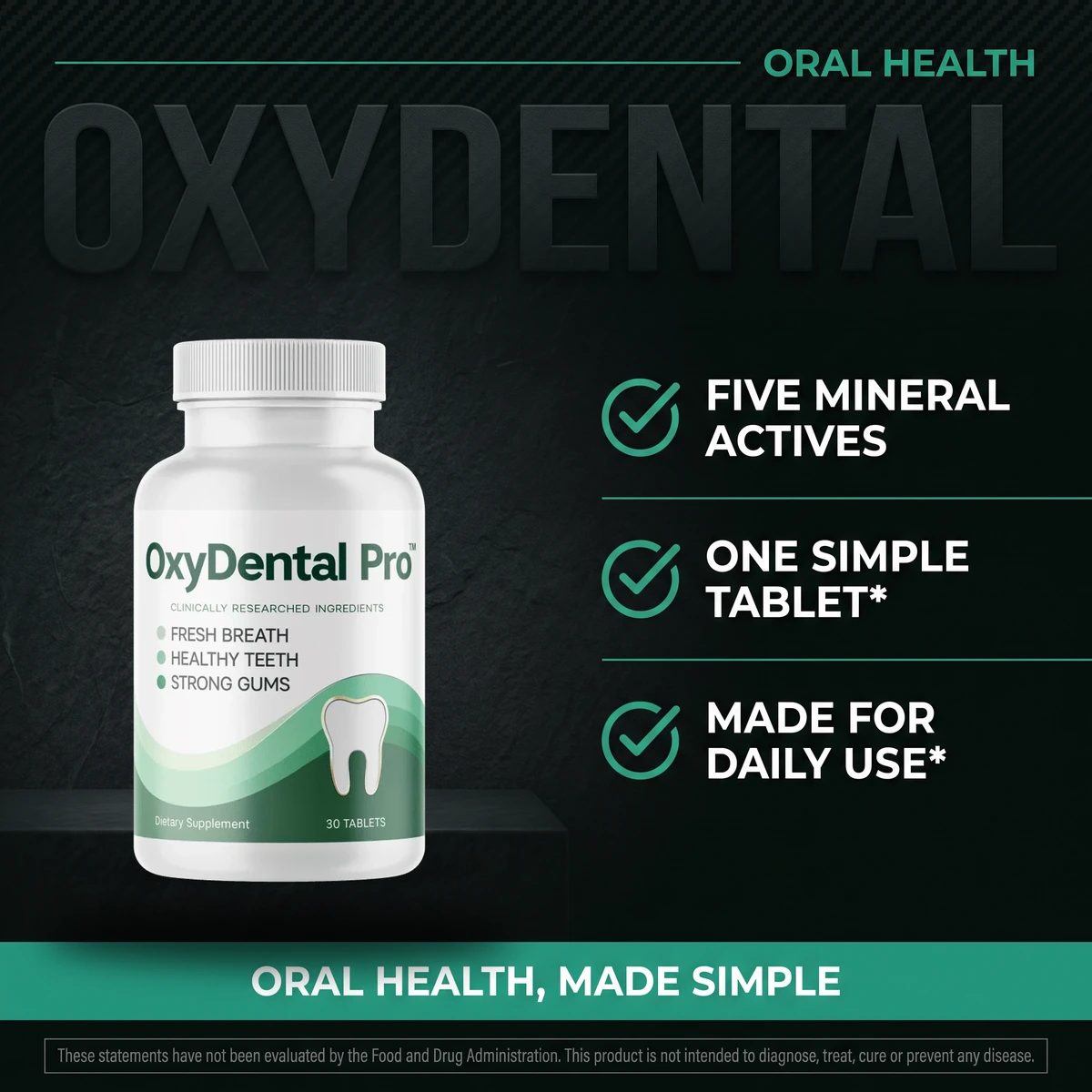
Brushing and rinsing clean the surface of your teeth, but the strength of enamel and the health of your gums depend on the minerals your body has to work with. Calcium is the obvious one — it’s the primary building block of enamel — but it doesn’t act alone. Trace minerals such as iodine, copper and chromium each play quiet, supporting roles in a balanced mouth.
As we get older, two things tend to happen at once: diets narrow and mineral absorption dips. That combination is why a mineral-first approach to oral care becomes more valuable with age — not as a replacement for the mechanical basics, but as the nutritional layer underneath them.
A mineral-first routine is a short list, not a cabinet full of bottles. These are the nutrients with a real mechanism in the mouth, and an honest note on how strong the evidence behind each one is.
Enamel is a calcium-phosphate crystal, and the jawbone that anchors your teeth is the same chemistry in a different arrangement. What surprises most people is where enamel repair actually happens: at the tooth surface, out of saliva, using the calcium and phosphate saliva already carries. A swallowed dose does not settle onto a tooth. That distinction — systemic supply versus surface repair — is the single most useful idea in this field, and we take it apart properly in calcium vs hydroxyapatite for enamel.
Calcium intake without adequate vitamin D is money left on the table, because vitamin D governs how much calcium the gut absorbs. Vitamin D status also tracks with gum health in observational research, though association is not proof. Both threads are pulled apart in vitamin D and calcium for teeth.
Vitamin C is a required cofactor for collagen synthesis, and gum tissue is mostly collagen. Severe deficiency — scurvy — produces swollen, bleeding gums and loosening teeth, which tells you adequacy matters enormously. It does not tell you that more helps someone already adequate, and it certainly does not make bleeding gums a vitamin problem: they are usually a gum-disease problem. See vitamin C for gums and teeth.
Zinc carries a positive charge, and the volatile sulphur compounds behind everyday mouth odour carry a negative one, so zinc binds and removes them rather than masking them. It also slows the crystallisation step that turns soft plaque into hard tartar. Nearly all of that evidence comes from zinc applied in the mouth rather than swallowed, a caveat we spell out in zinc for teeth and gums.
Iodine, copper and chromium each have genuine physiological jobs and none of them is a dental treatment. Iodine supports thyroid hormone production — and note that people with thyroid conditions should discuss any added iodine with a doctor. Copper is required for connective-tissue enzymes. Chromium is studied for glucose handling, and because poorly controlled blood glucose is a recognised risk factor for gum disease, that link is real but indirect.
Lasting fresh breath comes from removing odour compounds rather than covering them. Two ingredients do this by different routes: copper chlorophyllin, a plant-derived compound with a long deodorising tradition behind it, and peppermint, which contributes the cooling, aromatic finish. A third route is dietary: xylitol is not fermented into acid by decay bacteria, which is why it turns up in tooth-friendly gum and lozenges. All three are supporting measures. Breath that does not improve with brushing, flossing and tongue cleaning is a reason to see a dentist, because persistent halitosis is frequently a symptom of gum disease or an untreated cavity.
You do not need a complicated regimen, and the order of operations matters more than the shopping list.
Nothing dramatic happens at a birthday, but several slow trends converge in midlife. Gum recession exposes root surfaces, which are softer than enamel and decay more readily. Saliva flow often falls, frequently as a side effect of common medications, and less saliva means less natural buffering and remineralising. Diets narrow, and absorption of several minerals becomes less efficient. Decades of ordinary wear have thinned enamel that the body cannot regrow. None of this is a reason for alarm, and all of it is a reason to be more deliberate about both the mechanical routine and the nutritional one.
Here is the honest boundary, stated once and plainly. A daily mineral tablet can help cover nutritional gaps that a narrow diet leaves. It cannot remineralise a cavity, reverse gum disease, tighten a loose tooth, or replace brushing, flossing and professional cleaning. No trial has been published on any finished multi-ingredient oral supplement, including this one, and research into an individual ingredient is never evidence about a finished product. Anyone who tells you otherwise is selling harder than the evidence allows.
OxyDental Pro puts five mineral and botanical actives into one easy daily tablet — backed by a 60-day guarantee.
See OxyDental PackagesCalcium is the headline mineral in enamel, but trace minerals matter too — iodine, copper and chromium each play supporting roles in a healthy mouth. A diet-plus-supplement approach helps cover the gaps most modern diets leave.
Ingredients like copper chlorophyllin and peppermint are traditionally used to neutralise odour compounds rather than mask them, which is why they appear in mineral-based oral formulas such as OxyDental Pro. Breath that does not improve with brushing, flossing and tongue cleaning is a different matter and should be checked by a dentist, because persistent halitosis is often a symptom of gum disease or an untreated cavity.
No. Early enamel demineralisation can partly remineralise from saliva, but a cavity that has broken through the surface has to be restored by a dentist, and gum disease is treated with professional cleaning and periodontal care. A supplement is nutritional support alongside that care, never a replacement for it.
Yes, on both counts that matter. Whole foods supply minerals in amounts and combinations no tablet matches, and how often you eat sugar matters more than how much, because each exposure starts a separate acid episode. A supplement is for covering gaps a narrow diet leaves, which is a smaller and more honest job.
Several slow changes converge. Gums recede and expose softer root surfaces, saliva flow often drops, frequently as a medication side effect, mineral absorption becomes less efficient, and decades of ordinary wear have thinned enamel the body cannot regrow. None of it is inevitable damage, but all of it rewards being more deliberate about both cleaning and nutrition.
Sources for the claims above. Every PubMed link was checked against the NCBI record on 3 September 2026, so the title shown here is the title of the paper it opens.
Research into an ingredient is not evidence about any finished product. No clinical trial has been published on the OxyDental Pro formula, and none of the studies above tested it; the doses used in research are frequently different from the amounts on a supplement label.
Keep reading: each nutrient above has its own guide in the OxyDental ingredient library, or go back to the OxyDental Pro overview to see the full Supplement Facts panel.
† These statements have not been evaluated by the FDA. This product is not intended to diagnose, treat, cure or prevent any disease. This article is for general information only and is not medical advice.