
Disclosure: this is an independent guide, not the manufacturer’s website. Some links here are affiliate links and we may earn a commission at no extra cost to you. † These statements have not been evaluated by the Food and Drug Administration. This product is not intended to diagnose, treat, cure or prevent any disease, and nothing here is medical or dental advice — bleeding gums, persistent pain, a loose tooth or a mouth sore that has not healed in two weeks need a dentist.
| What it is | A fat-soluble vitamin (menaquinone) found in fermented foods and some animal products. |
| Why for teeth | It activates osteocalcin, the protein that binds calcium and directs it into teeth and bone. |
| Dosing context | Supplements commonly provide 45–180 µg of MK-7; take with a fat-containing meal. |
| Label tip | Prefer MK-7 for its long half-life; pair with calcium and vitamin D. |
Most people know they need calcium for strong teeth. Far fewer know that calcium needs directions. Getting enough of the mineral is only half the job; the body still has to steer it into the right places — into the hard mineral of teeth and bone, and away from soft tissues where it does not belong. That steering job is where vitamin K2 for teeth comes in. This fat-soluble vitamin switches on the very proteins that grab calcium and lock it into place, which is why it has become one of the most talked-about nutrients in the calcium conversation. This guide explains what vitamin K2 is, the elegant mechanism behind its role, the MK-4 versus MK-7 difference, how much people take, and what to look for on a label.
Because vitamin K2 is really a story about using calcium well, it pairs naturally with our guide to calcium versus hydroxyapatite for enamel and with the enamel-and-mineral thinking behind OxyDental Pro. It is also a good companion to our overview of keeping teeth and gums strong with minerals.
Vitamin K comes in two families. Vitamin K1 (phylloquinone) is the one in leafy greens, and its best-known job is helping blood to clot. Vitamin K2 (menaquinone) is a related group of compounds found in fermented foods such as natto and certain cheeses, and in smaller amounts in animal products. K2's claim to fame is different from K1's: it is the form most involved in getting calcium into the right tissues.
Both are fat-soluble, which simply means they are absorbed alongside dietary fat rather than dissolving in water. That single fact has a practical consequence you will see again later: vitamin K2 is absorbed best when taken with a meal that contains some fat.
Vitamin K2 does not become part of enamel itself. Instead, it works behind the scenes as an activator. Here is the sequence, step by step.
Your body makes special proteins — the most important for teeth and bone is osteocalcin — whose job is to bind calcium. But these proteins are manufactured in an inactive state. They only switch on after an enzyme adds a chemical group to them in a reaction called carboxylation, and vitamin K2 is the essential cofactor that reaction depends on. No K2, no activation.
Once osteocalcin is switched on by K2, it can grab calcium and help incorporate it into the mineral lattice of bone and the tooth-supporting structures. This is why people describe K2 as a “traffic controller” for calcium: it does not supply the mineral, it directs where the mineral goes.
A second K2-dependent protein, matrix Gla-protein, is involved in keeping calcium out of soft tissue such as blood-vessel walls. The broad theme is the same: vitamin K2 supports the body's ability to put calcium into the tissues that should be mineralised and to keep it out of those that should not. For teeth, that means the calcium you consume is more likely to end up doing structural work.
Vitamin K2 is not a single molecule but a family, and two members dominate supplement labels.
MK-7 is derived from fermented foods such as natto. Its standout feature is a long half-life: it stays active in the bloodstream for many hours, even a couple of days, so a small daily dose keeps levels topped up. That efficiency is why most modern K2 supplements choose MK-7.
MK-4 is used and cleared by the body much more quickly, so studies that use MK-4 tend to use larger amounts, sometimes split through the day. It is a legitimate form with its own research history, but it is less convenient for a once-daily routine.
For everyday use, MK-7 usually makes the most sense: it is potent at microgram doses and forgiving of a simple, once-a-day schedule.
The mechanism is well described and the outcome evidence is all about bone, not teeth. Vitamin K activates osteocalcin and matrix Gla protein, the carriers that route calcium into mineralised tissue, and trials have measured what that does to bone markers. A 2025 systematic review and meta-analysis in Frontiers in Endocrinology assessed the effect of vitamin K2 supplementation on bone turnover biochemical markers in postmenopausal osteoporosis (PMID 41268154), and a 2023 randomised placebo-controlled trial in Archives of Osteoporosis tested the additive effect of vitamin K supplementation with a bisphosphonate on fracture risk in post-menopausal osteoporosis (PMID 37338608).
No published trial has measured vitamin K2 against a dental endpoint in humans, and the tooth story is an extrapolation from the bone story via a shared mechanism. That is a reasonable hypothesis and it is not a finding, and we would rather say so than dress it up. Vitamin K also interacts with warfarin and similar anticoagulants, which makes it one of the few supplement nutrients with a genuine drug interaction to respect; reference intakes and that caution are set out in the NIH Office of Dietary Supplements vitamin K fact sheet.
The biochemistry of vitamin K2 is well established: its role as the cofactor that activates osteocalcin and matrix Gla-protein is textbook nutrition. Research continues to explore how meaningfully K2 supplementation shifts long-term bone and cardiovascular outcomes, and the picture there is still developing.
The honest, compliant framing is this: vitamin K2 has a clear, mechanism-based role in helping the body activate the proteins that put calcium to work. It is a supporting nutrient, not a treatment for any dental or bone condition, and it does not replace brushing, flossing or professional care. Its greatest value is as a partner to calcium and vitamin D rather than as a stand-alone fix.
One important safety note: anyone taking a blood-thinning medicine such as warfarin should talk to their doctor before using any vitamin K product, because vitamin K influences clotting and can interact with these drugs. For most people not on those medicines, food-level and standard supplement amounts of K2 are considered well tolerated.
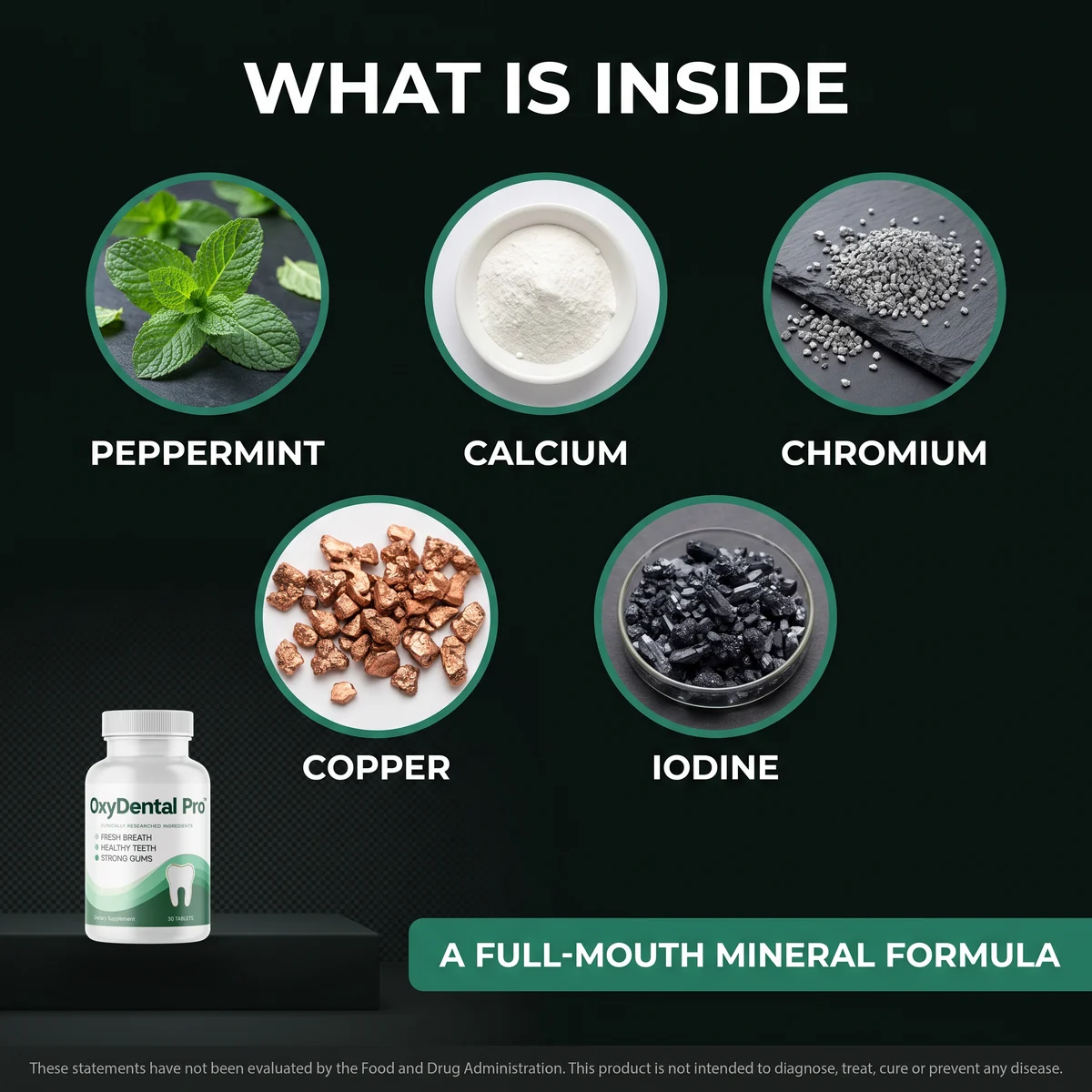
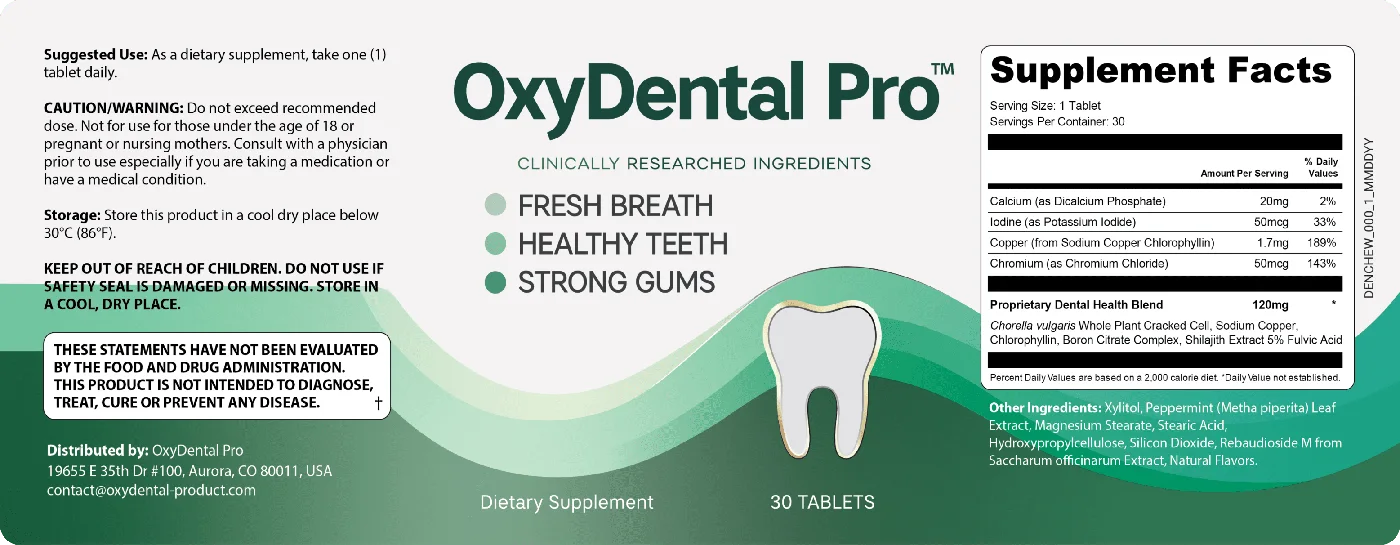
Calcium is the supply; vitamins like K2 and D are the delivery system. OxyDental Pro is built on that whole-picture thinking — measured mineral actives designed to be used, not just consumed. Calcium supports enamel, boron supports mineral balance, and the formula is designed as a team rather than a single ingredient.
See the Full FormulaA quality label states the exact form — ideally MK-7 — and the amount in micrograms, rather than a vague “vitamin K2” with no detail.
Look for a dose in the tens-to-low-hundreds of micrograms range. K2 is powerful at small amounts; a huge number is not a mark of quality.
K2 makes the most sense alongside calcium and vitamin D, and near trace minerals like boron that also support mineral balance. A team of nutrients beats an isolated one.
MK-7 is often described as fermentation-derived (from natto). Prefer transparent, non-GMO sourcing from a manufacturer that tests its raw materials.
OxyDental Pro combines measured mineral actives with a botanical blend in one daily tablet. The 6-bottle package is the best value with free U.S. shipping and three bonus guides, backed by a 60-day money-back guarantee.
 See OxyDental Packages
Vitamin K2 activates proteins, chiefly osteocalcin, that bind calcium and direct it into the mineral structure of teeth and bone. It works less like a building block and more like a traffic controller, helping calcium reach the tissues that need it rather than accumulating where it should not. This is why K2 is often paired with calcium and vitamin D.
MK-4 and MK-7 are two forms of vitamin K2. MK-7 comes from fermented foods such as natto, is absorbed well and stays active in the blood far longer, so it works at small daily doses. MK-4 is used in the body more quickly and is typically studied at higher amounts. Many modern supplements choose MK-7 for its long half-life.
There is no separate official requirement for K2 specifically; general adequate intake for total vitamin K is about 90 to 120 micrograms per day. Supplements commonly provide roughly 45 to 180 micrograms of MK-7. Because K2 is fat-soluble, it is best absorbed with a meal that contains some fat.
They form a natural team. Vitamin D helps you absorb calcium, and vitamin K2 helps direct that calcium into teeth and bone. Taking calcium alone addresses supply but not delivery, which is why many formulas pair the mineral with the vitamins that help the body use it correctly.
Anyone taking blood-thinning medication such as warfarin should speak to their doctor before using any vitamin K supplement, because vitamin K affects blood clotting and can interact with these drugs. As always, check with your physician if you are pregnant, nursing, taking medication or have a health condition.
Not quite. Leafy greens are rich in vitamin K1, which is mainly involved in blood clotting. Vitamin K2 is the menaquinone form found in fermented foods and some animal products, and it is the form most involved in activating the proteins that direct calcium into teeth and bone. The two are related but not interchangeable.
Sources for the claims above. Every PubMed link was checked against the NCBI record on 3 September 2026, so the title shown here is the title of the paper it opens.
Research into an ingredient is not evidence about any finished product. No clinical trial has been published on the OxyDental Pro formula, and none of the studies above tested it; the doses used in research are frequently different from the amounts on a supplement label.
The OxyDental Research Team is an independent group of writers and reviewers focused on oral-health nutrition and supplement science. We read the ingredient literature, cross-check dosing against public sources such as the NIH Office of Dietary Supplements, and explain the mechanisms in plain language.
Everything here is general educational information about ingredients and their traditional or researched uses. It is not medical advice, and it does not diagnose, treat, cure or prevent any disease. Talk to a dentist or physician about your own situation.
Keep exploring: compare calcium and hydroxyapatite for enamel, read about boron for teeth and bones, or return to the OxyDental Pro homepage.
† These statements have not been evaluated by the FDA. This product is not intended to diagnose, treat, cure or prevent any disease. This article is for general information only and is not medical advice.