
Disclosure: this is an independent guide, not the manufacturer’s website. Some links here are affiliate links and we may earn a commission at no extra cost to you. † These statements have not been evaluated by the Food and Drug Administration. This product is not intended to diagnose, treat, cure or prevent any disease, and nothing here is medical or dental advice — bleeding gums, persistent pain, a loose tooth or a mouth sore that has not healed in two weeks need a dentist.
| What it is | A vitamin-like compound every cell uses to make energy and that also works as an antioxidant. |
| Why for gums | It fuels the cells of hard-working gum tissue and helps neutralise free radicals. |
| Dosing context | Supplements commonly supply 30–200 mg/day; take with a fat-containing meal. |
| Label tip | Ubiquinol may absorb better; ubiquinone is well studied and economical. |
Every cell in your body runs on energy, and the tissue that lines and supports your teeth is no exception. Gums are busy, constantly renewing tissue, and that upkeep takes fuel. This is where CoQ10 for gums and teeth enters the picture. Coenzyme Q10 is a compound your cells use to turn food into usable energy, and it doubles as an antioxidant — two jobs that make it a natural fit for tissue that is always at work. This guide explains what CoQ10 is, exactly how it supports the mouth, the ubiquinone versus ubiquinol difference, why natural levels change with age, how much people take, and what to look for on a label.
CoQ10 is a soft-tissue and cellular-energy story, which makes it a good companion to our guides on vitamin C for gums and chlorella for teeth and gums, and to the whole-mouth thinking behind OxyDental Pro.
Coenzyme Q10, often shortened to CoQ10, is a vitamin-like compound found in virtually every cell. Its home is the mitochondria — the tiny power plants inside cells — where it plays an essential part in the chain of reactions that produces ATP, the molecule cells use as energy currency. Without CoQ10, that energy production line cannot run.
It is not, strictly speaking, a vitamin, because the body makes its own. CoQ10 is also found in foods such as organ meats, fatty fish, nuts and whole grains. Like vitamins A, D, E and K, it is fat-soluble, which has practical consequences for how it is best absorbed from a supplement.
CoQ10's contribution to oral health rests on its two core roles: making energy and fighting oxidation. Here is how those play out in the mouth.
Gum tissue is metabolically active. Cells there divide, repair and maintain the barrier around each tooth, and all of that requires a steady supply of ATP. Because CoQ10 is a required part of the ATP production chain, an adequate supply supports the cellular energy that busy tissue depends on for its normal upkeep.
In its reduced form (ubiquinol), CoQ10 is a fat-soluble antioxidant. It helps protect cell membranes from oxidative damage caused by free radicals — the reactive by-products of normal metabolism. In the oxygen-rich, high-turnover environment of the mouth, that protective role is a sensible fit.
Tissues with heavy energy needs tend to carry more CoQ10, which is why the compound has long attracted interest for the gums. The logic is straightforward: support the energy supply and antioxidant defences of active tissue, and you support that tissue's ability to do its everyday maintenance work.
CoQ10 exists in two interchangeable forms, and both appear on supplement labels.
Ubiquinone is the oxidised form. It is the version used in most of the classic research, it is stable, and it is usually more affordable. The body converts ubiquinone into the active antioxidant form as needed.
Ubiquinol is the reduced, already-active antioxidant form. It is often promoted as better absorbed, a difference that may matter more for older adults, whose conversion and absorption can be less efficient. It tends to cost more.
Both raise the body's CoQ10 levels. For many people ubiquinone is a well-studied, economical choice; those who are older or want maximum absorption sometimes prefer ubiquinol. Either way, taking it with dietary fat helps.
One reason CoQ10 attracts so much interest is that the body's natural production tends to decline with age. Certain medications can also lower CoQ10 levels. That combination — a compound we make ourselves, but make less of over time — is a big part of why some people, particularly later in life, choose to supplement it. This mirrors a theme across oral nutrition: the systems that keep the mouth healthy can need a little more support as the years add up, a point we explore in our guide to keeping teeth and gums strong with minerals after 40.
CoQ10 has more dental research behind it than most supplement ingredients, and reading it carefully matters, because nearly all of it tests CoQ10 applied to the gum or given alongside professional treatment rather than swallowed by a healthy person. A 2025 crossover randomised controlled trial in the Journal of Contemporary Dental Practice tested a liquid toothpaste containing coenzyme Q10 for reducing dental plaque and gingivitis (PMID 41368742). A 2024 double-blind randomised clinical trial in the Saudi Dental Journal compared omega-3 and CoQ10 as adjuncts to periodontal therapy and measured total antioxidant capacity of saliva in patients with chronic periodontitis (PMID 40952889). A 2026 randomised clinical study in Bioinformation compared topical and intramuscular CoQ10 in non-surgical periodontal disease management (PMID 42282346).
Three things follow. The signal is real enough to be worth knowing about. It is an adjunct signal — measured on top of scaling and root planing carried out by a clinician, in patients who were already being treated. And a swallowed daily dose in a healthy mouth is not the thing that was tested. Periodontitis is diagnosed and treated by a dentist; the NIDCR guide to gum disease explains what that treatment involves.
CoQ10's essential role in cellular energy production and its function as a fat-soluble antioxidant are well established biochemistry. It has been studied in the context of gum health, and it remains an ingredient of ongoing research interest. As with most supplements, the most honest framing is measured: CoQ10 is a supportive compound with clear, mechanism-based roles in energy and antioxidant defence, not a proven treatment for any gum or dental condition.
The compliant takeaway: CoQ10 supports the cellular energy and antioxidant defences of active tissue as part of a healthy routine. It does not replace brushing, flossing or the care of a dentist, and it works best alongside a balanced diet.
There is no official recommended daily intake for CoQ10 because the body produces its own. One practical note: if you take blood-pressure or blood-thinning medication, check with your doctor first, since CoQ10 can interact with these. For most other people, standard supplement amounts are considered well tolerated.
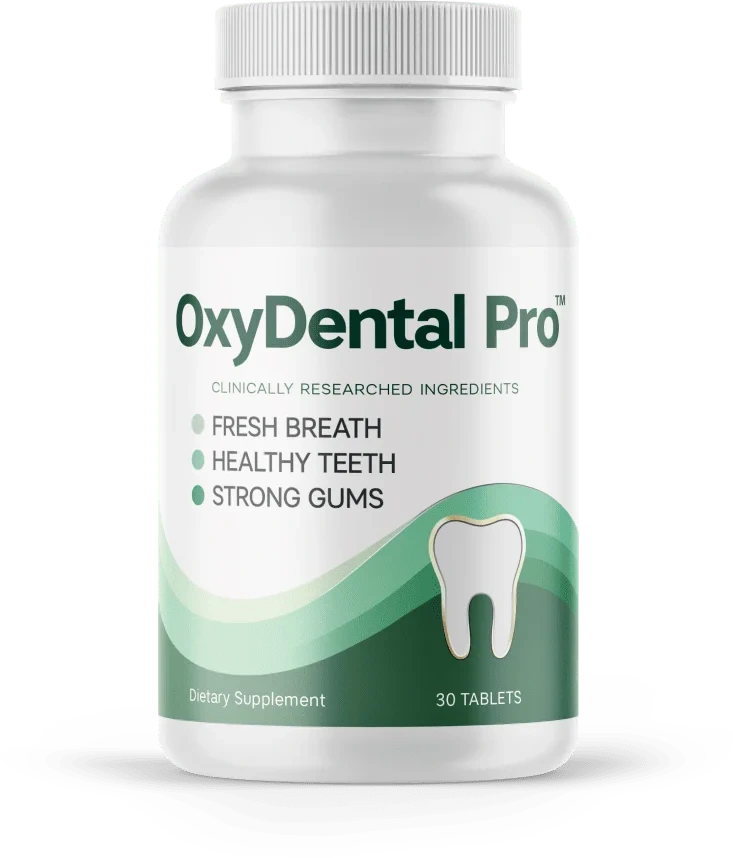
CoQ10 supports the cellular side of gum health; minerals support the structure of teeth. OxyDental Pro focuses on the mineral side with calcium, iodine, chromium, copper chlorophyllin and a botanical blend — a sensible daily base that pairs well with soft-tissue nutrients. Five actives, one daily tablet.
See the Full FormulaA good label names ubiquinone or ubiquinol and gives the milligram amount, rather than a vague “CoQ10 complex”.
Because CoQ10 is fat-soluble and not very water-soluble, softgels in an oil base, or a product designed for better absorption, tend to work better than a dry powder in a tablet. Taking it with food helps regardless.
A dose in the common 30–200 mg range suits most needs. Higher is not automatically better.
CoQ10 sits naturally beside other soft-tissue nutrients like vitamin C and, for the structural side, mineral support for enamel. A team of nutrients gives more complete coverage than any single ingredient.
OxyDental Pro brings measured mineral actives together with a botanical blend in one daily tablet, a solid base alongside soft-tissue nutrients. The 6-bottle package is the best value with free U.S. shipping and three bonus guides, backed by a 60-day money-back guarantee.
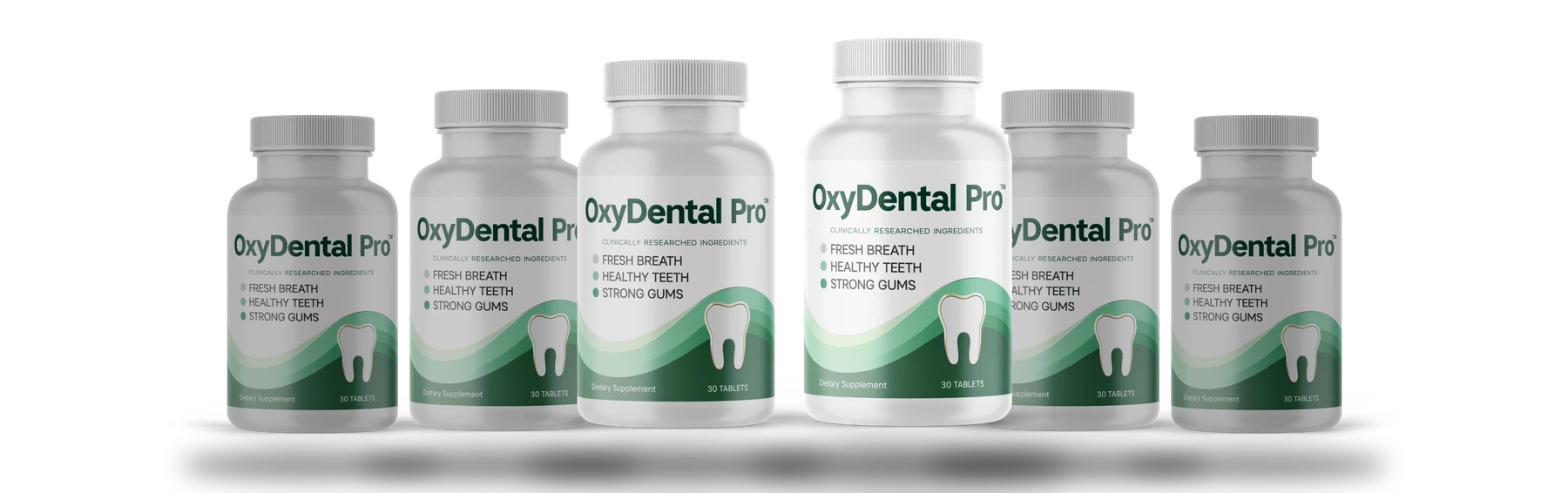 See OxyDental Packages
CoQ10 is a compound every cell uses to produce energy, and it also works as an antioxidant. In the gums, which are active tissue that renews constantly, it helps supply the cellular energy for that upkeep and helps neutralise free radicals. This is why coenzyme Q10 is a long-standing ingredient in oral-care research and gum-support formulas.
They are two forms of the same molecule. Ubiquinone is the oxidised form and the one most studied; the body converts it to ubiquinol, the reduced, active antioxidant form. Ubiquinol is often marketed as better absorbed, which can matter more for older adults, while ubiquinone is well researched and usually less expensive. Both raise CoQ10 levels.
Supplements commonly provide between 30 and 200 mg of CoQ10 per day, and it is generally well tolerated. Because CoQ10 is fat-soluble, taking it with a meal that contains some fat improves absorption. There is no official recommended intake because the body makes its own, but natural production tends to decline with age.
Yes. CoQ10 is made naturally in the body and is also found in foods such as organ meats, fatty fish and whole grains. However, production tends to fall with age and can be affected by certain medications, which is part of why some people choose to supplement it, especially later in life.
CoQ10 is generally regarded as well tolerated as a daily supplement, with mild digestive upset being the most common complaint. If you take blood-pressure or blood-thinning medication, check with your doctor first, as CoQ10 may interact. As always, consult your physician if you are pregnant, nursing, taking medication or have a health condition.
Yes, in small amounts. Organ meats, fatty fish such as sardines and mackerel, nuts and whole grains all contain CoQ10, and the body also makes its own. Food amounts are modest compared with a supplement, which is why people who want a higher, consistent intake often choose a capsule or softgel.
Sources for the claims above. Every PubMed link was checked against the NCBI record on 3 September 2026, so the title shown here is the title of the paper it opens.
Research into an ingredient is not evidence about any finished product. No clinical trial has been published on the OxyDental Pro formula, and none of the studies above tested it; the doses used in research are frequently different from the amounts on a supplement label.
The OxyDental Research Team is an independent group of writers and reviewers focused on oral-health nutrition and supplement science. We read the ingredient literature, cross-check dosing against public sources such as the NIH Office of Dietary Supplements, and explain the mechanisms in plain language.
Everything here is general educational information about ingredients and their traditional or researched uses. It is not medical advice, and it does not diagnose, treat, cure or prevent any disease. Talk to a dentist or physician about your own situation.
Keep exploring: read about vitamin C for gums, learn how chlorella supports soft tissue, or return to the OxyDental Pro homepage.
† These statements have not been evaluated by the FDA. This product is not intended to diagnose, treat, cure or prevent any disease. This article is for general information only and is not medical advice.