
Disclosure: this is an independent guide, not the manufacturer’s website. Some links here are affiliate links and we may earn a commission at no extra cost to you. † These statements have not been evaluated by the Food and Drug Administration. This product is not intended to diagnose, treat, cure or prevent any disease, and nothing here is medical or dental advice — bleeding gums, persistent pain, a loose tooth or a mouth sore that has not healed in two weeks need a dentist.
| What it is | The leaf of the peppermint plant and its menthol-rich essential oil. |
| Why for the mouth | Traditionally used for fresh breath and a clean-feeling mouth; peppermint oil has studied antibacterial activity. |
| The active | Menthol — the source of the cooling sensation and much of the freshening effect. |
| Label tip | Look for peppermint leaf extract or peppermint essential oil, not a vague “natural flavour”. |

Peppermint is so familiar in toothpastes, mouthwashes and gum that it is easy to dismiss it as mere flavour. But peppermint earns its place in oral care for real reasons. Peppermint for oral health is a story about two things working together: the immediate, cooling freshness of menthol, and the natural antibacterial activity of peppermint’s essential oil. This guide explains what peppermint leaf is, the mechanism behind its freshening and clean-feel effect, how it differs from simply masking odour, how much is typically used, and what to look for on a label.
Peppermint leaf extract is one of the freshening ingredients in OxyDental Pro, working alongside copper chlorophyllin. It is the natural companion read to our guide on copper chlorophyllin for bad breath and our deep dive on xylitol benefits for teeth.
Peppermint (Mentha × piperita) is a hybrid mint plant whose leaves are packed with a fragrant essential oil. That oil is rich in menthol and menthone — the compounds responsible for peppermint’s unmistakable cool, clean taste and sensation. Peppermint has been used in food, tea and traditional remedies for centuries, and it has been a mainstay of oral care for as long as modern toothpaste has existed.
In supplements, peppermint usually appears as a leaf extract or a measured amount of the essential oil, chosen to deliver a pleasant, consistent freshening effect in a small dose. It is exactly the kind of well-loved botanical that makes a daily oral tablet enjoyable to take while doing a genuine job.
Peppermint works through a combination of a sensory effect and a biological one. Here is how.
Menthol activates the cold-sensing receptors in the mouth, which is why peppermint feels cooling even when nothing has changed temperature. That sensation is strongly linked in our minds to cleanliness and freshness — part of why a minty mouth simply feels clean. It is a real, useful effect, even though it is sensory rather than antibacterial.
Beyond the sensation, peppermint essential oil has been studied for genuine antibacterial properties, including activity against some of the bacteria found in dental plaque and involved in mouth odour. This is why peppermint is more than a flavour: it can help support a cleaner oral environment, complementing mechanical cleaning and other freshening ingredients.
There is an important distinction between masking odour and addressing it. Peppermint does deliver an instant freshening mask, but its antibacterial side means it also plays a supporting role against the sources of odour. Paired with an ingredient like copper chlorophyllin — which targets odour compounds at the source — peppermint rounds out a fresh-breath strategy from both directions.
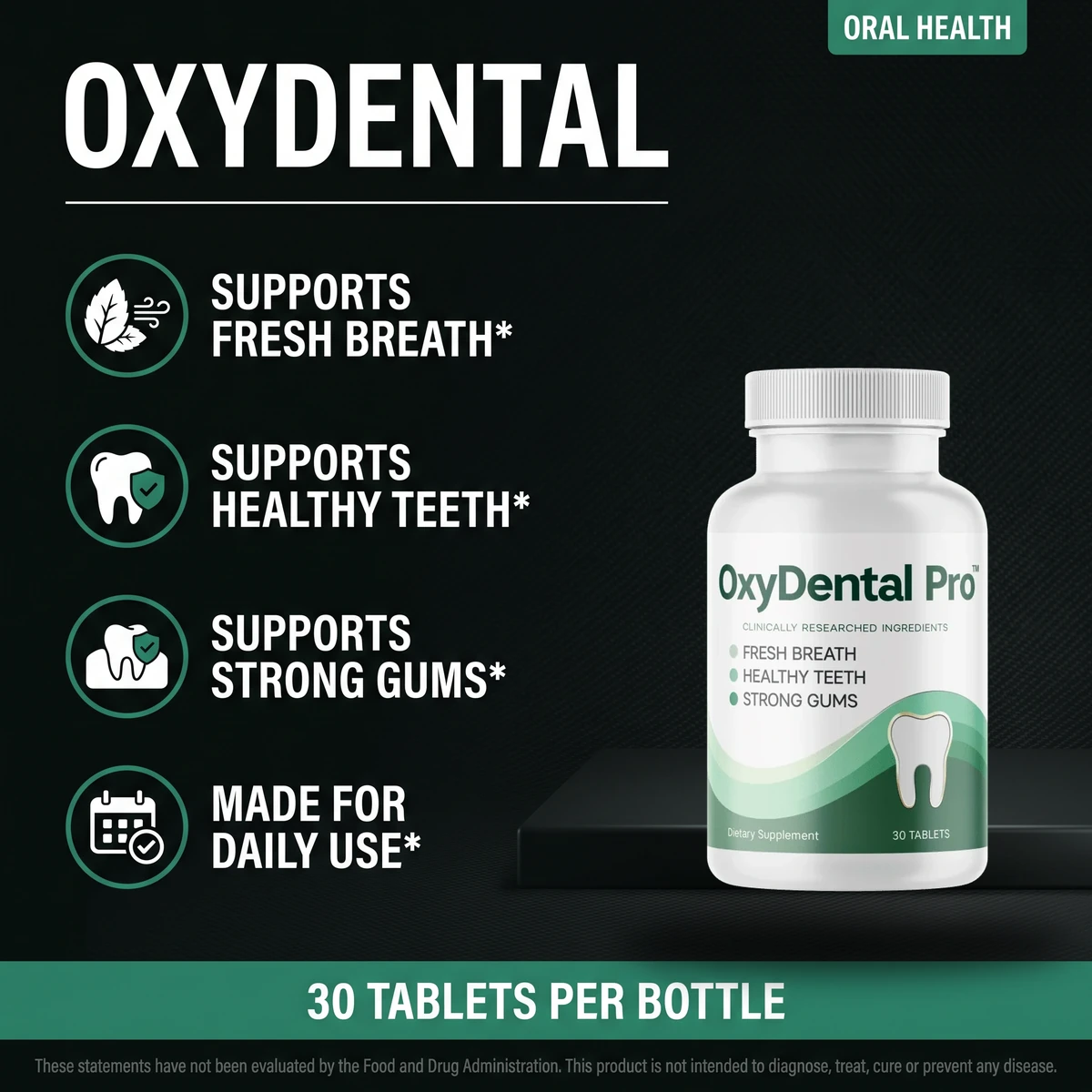
Fresh breath is best supported from more than one direction, and this is where peppermint and copper chlorophyllin make a good team. Copper chlorophyllin is traditionally used as an internal deodoriser that neutralises odour compounds at the source; peppermint adds immediate cooling freshness plus antibacterial support. One works quietly on the cause, the other delivers the clean, cool finish you can feel.
That combination is exactly how OxyDental Pro approaches breath: not a single mint hit, but a source-level freshener and a sensory-plus-antibacterial botanical working together. For the full mechanism on the deodorising partner, see our copper chlorophyllin guide.
Peppermint’s oral research is laboratory-heavy and clinically light, which is worth saying before the mechanism is described. A 2024 study in the Journal of Toxicology and Environmental Health, Part A characterised Mentha piperita essential oil and measured its cytotoxicity and its antimicrobial, antibiofilm and anti-quorum-sensing activity against the oral pathogen Streptococcus mutans (PMID 38984907). A 2015 systematic review in Molecules surveyed the antibacterial activity of essential oils and their isolated constituents against cariogenic bacteria (PMID 25911964). These are dish-and-plate findings; they establish plausibility, not clinical benefit.
For an overview of peppermint oil as a supplement ingredient, including what is and is not established about it and the cautions attached, the US National Center for Complementary and Integrative Health maintains a plain-language page on peppermint oil. The practical summary: peppermint reliably makes a mouth feel and taste fresher, the antibacterial work is promising in vitro, and none of it makes peppermint a treatment for gum disease or decay.
Peppermint oil is one of the better-studied essential oils, with laboratory research documenting antimicrobial activity against a range of bacteria, including some oral species, and a long, well-established history of use as a flavour and freshening agent in oral care. Menthol’s cooling action on cold receptors is also well characterised.
The compliant, honest framing is this: peppermint is a traditional freshening botanical with studied antibacterial properties and a pleasant, clean-feeling effect. It is not a treatment for gum disease, bad breath as a medical condition, or any other ailment, and it does not replace brushing, flossing and regular dental care.
In OxyDental Pro, peppermint leaf extract is included as a freshening botanical alongside copper chlorophyllin and the tooth-friendly sweeteners xylitol and stevia, so the daily tablet tastes clean and supports fresh breath without added sugar. That is the sensible way to use peppermint in an oral supplement: a measured, pleasant amount, in good company.
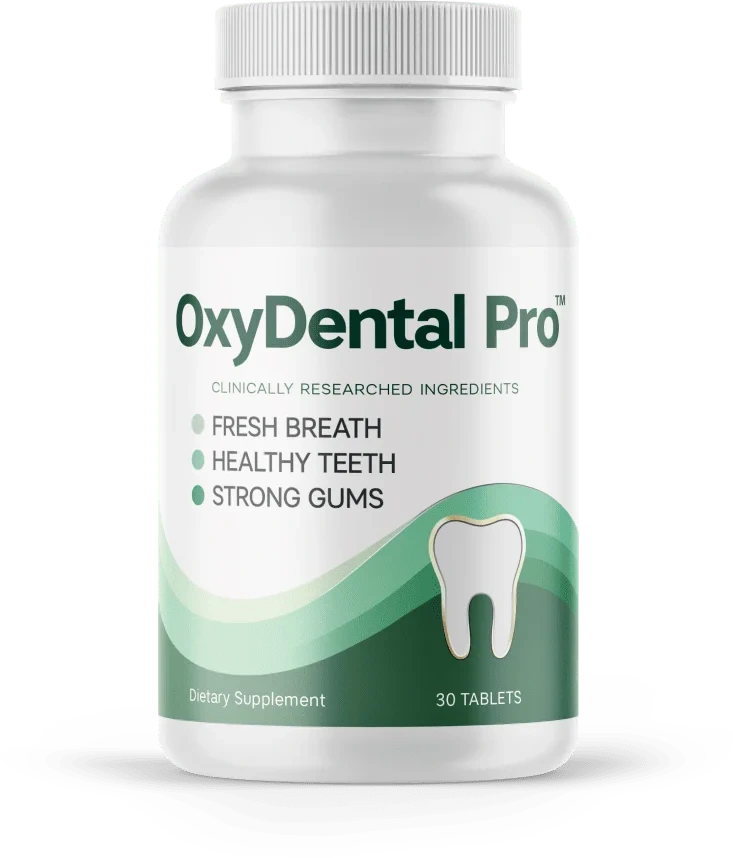
Peppermint and copper chlorophyllin handle fresh breath, while calcium supports enamel, iodine supports soft tissue, chromium helps with sugar handling and a botanical blend rounds out whole-mouth support. Five actives, one daily tablet.
See the Full FormulaAroma is only one of the two ways a formula can attack mouth odour; the other is ionic, and it is the subject of our guide to zinc for teeth and gums.
Look for peppermint leaf extract or peppermint essential oil, rather than a vague “natural flavour” that could be anything. The named form tells you peppermint is a real, intended ingredient, not just an aroma.
A product that supports breath from more than one angle — peppermint plus a source-level deodoriser like copper chlorophyllin — is doing more than masking. Mint alone is a nice finish; mint plus a cause-level ingredient is a strategy.
Peppermint products should not undo their own good work with sugar. Look for tooth-friendly sweeteners such as xylitol and stevia rather than fermentable sugar.
As always, prefer products made in an FDA-registered, GMP-certified facility from non-GMO ingredients, with transparent labelling and no unnecessary fillers.
OxyDental Pro pairs peppermint with copper chlorophyllin for fresh breath, alongside calcium, iodine, chromium and a botanical blend, in one daily tablet. The 6-bottle package is the best value with free U.S. shipping and three bonus guides, backed by a 60-day money-back guarantee.
 See OxyDental Packages
Peppermint leaf and its menthol-rich essential oil are traditionally used to support fresh breath and a clean-feeling mouth. Peppermint oil has natural antibacterial properties studied against common mouth bacteria, and its menthol gives the cooling, fresh sensation people associate with a clean mouth.
It does a bit of both. The menthol in peppermint gives an immediate cooling freshness, and peppermint oil also has antibacterial activity studied against some of the mouth bacteria involved in odour. In OxyDental Pro it works alongside copper chlorophyllin, which targets odour at the source, so freshness is supported from more than one angle.
The key active is the essential oil of the peppermint leaf, which is rich in menthol and menthone. Menthol is responsible for the cooling sensation and is a major reason peppermint has been a flavour and freshening agent in oral care for generations.
Peppermint leaf and food-level amounts of peppermint are widely used and generally well tolerated. Concentrated peppermint oil should be used in appropriate amounts, which is why a measured leaf extract in a daily tablet is a sensible way to get its freshening benefit. Check with your physician if you are pregnant, nursing or have reflux.
Look for peppermint listed specifically as peppermint leaf extract or peppermint essential oil, rather than a vague natural flavour. In a supplement, peppermint paired with a source-level freshener such as copper chlorophyllin and a tooth-friendly sweetener is a sign of thoughtful formulation.
No. Peppermint supports fresh breath and a clean feel and has studied antibacterial properties, but it is a supporting ingredient, not a substitute for mechanical cleaning. Keep brushing and flossing and see your dentist regularly; use peppermint-containing products as a complement.
Sources for the claims above. Every PubMed link was checked against the NCBI record on 3 September 2026, so the title shown here is the title of the paper it opens.
Research into an ingredient is not evidence about any finished product. No clinical trial has been published on the OxyDental Pro formula, and none of the studies above tested it; the doses used in research are frequently different from the amounts on a supplement label.
The OxyDental Research Team is an independent group of writers and reviewers focused on oral-health nutrition and supplement science. We read the ingredient literature, cross-check facts against public sources such as the NIH and NCCIH, and explain the mechanisms in plain language.
Everything here is general educational information about ingredients and their traditional or researched uses. It is not medical advice, and it does not diagnose, treat, cure or prevent any disease. Talk to a dentist or physician about your own situation.
Keep exploring: read how copper chlorophyllin targets bad breath, learn about xylitol benefits for teeth, or return to the OxyDental Pro homepage.
† These statements have not been evaluated by the FDA. This product is not intended to diagnose, treat, cure or prevent any disease. This article is for general information only and is not medical advice.